By Ogochukwu Ogene
Contributing Writer
Onumba.com, Nigeria ———- Nigeria has no shortage of talent.
Sometimes, we just need to look beyond the noise and pay attention to the people quietly building solutions.
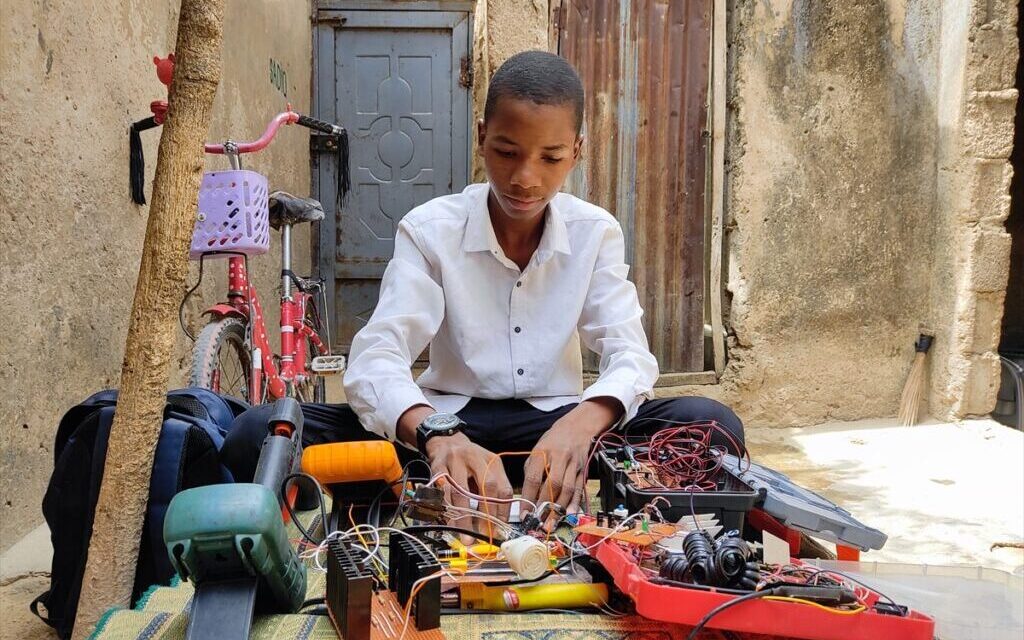
One of such people is Khalifa Aminu, a young Nigerian innovator from Kano who has been using technology to solve a problem that affects millions of visually impaired people.
His journey started with a simple observation.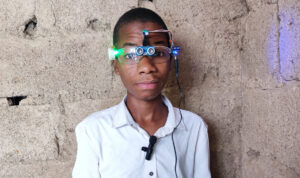
He saw visually impaired people in his community struggling with movement and wanted to create something that could make their daily lives easier. That idea led him to develop sensory glasses that use sensors to detect obstacles and alert the wearer.
But Khalifa did not stop there.
His recent work has taken the idea further with AI and tracking capabilities. His newer Glass V2 is designed to improve awareness of the user’s surroundings and support more independent navigation.
Imagine putting on a pair of glasses and having technology help you understand what is happening around you.
An obstacle ahead?
The system can detect it.
Need to know your location?
GPS can help.
Need someone you trust to know where you are?
Location tracking can provide that connection.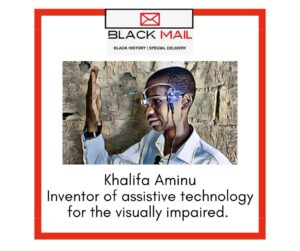
And with voice AI being explored, the possibilities become even bigger.
This is what makes innovation exciting.
It is not simply about building something that looks futuristic.
It is about looking at an everyday problem and asking
“How can I make this better?”
Khalifa’s story also reminds us that innovation does not always begin inside a sophisticated laboratory.
Sometimes, it begins with curiosity.
Sometimes, it begins in a small workshop.
Sometimes, it begins with a young person who does not have all the resources but refuses to stop asking questions.
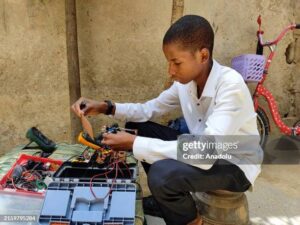
Khalifa has previously worked on several inventions, including electronic devices and agricultural technology. His sensory glasses have also received recognition, including the 2024 Indomie Heroes Awards, where he was recognised in the Intellectual Bravery category.
And this is why stories like this matter.
There are young Nigerians designing.
Building.
Experimenting.
Writing code.
Creating businesses.
Solving environmental problems.
Building assistive technologies.
And imagining possibilities that many people have not even considered.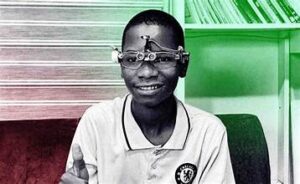
The challenge is not always talent.
Sometimes, it is access.
Access to funding.
Access to mentorship.
Access to equipment.
Access to research facilities.
Access to people who will look at a young person’s idea and say
“Let’s see how far we can take this.”
Khalifa’s invention is still developing, and there is a long road between a promising prototype and a product that can reach thousands of people. But the idea itself carries an important message.
Young Nigerians should not only be seen as consumers of technology.
We can be creators of it.
We can build solutions for our communities.
We can take local problems and turn them into global opportunities.
We can create technology that does more than entertain.
Technology that restores independence.
Technology that creates access.
Technology that gives people possibilities.
So, on another episode of how talented Nigerians truly are…
Here is a young Nigerian building glasses that could help people see the world differently.
And perhaps that is the bigger lesson.
The future of Nigeria will not only be shaped by the technologies we import.
It will also be shaped by the solutions Nigerians have the courage to build.
The future is Nigerian.
And it is already being built.
About the Author
Ogochukwu Ogene is a creative writing coach, spoken word artist, content strategist and social entrepreneur passionate about creativity, innovation, storytelling and youth development.
Through her work, she tells stories that inspire people to look beyond limitations, discover their potential and create meaningful solutions to real-world problems.
She is also the founder of The Prolific Hub, a platform focused on helping writers and digital creatives express themselves, build confidence and turn their skills into opportunities.
For Ogochukwu, storytelling is more than entertainment.
It is a tool for education, connection, advocacy and change.