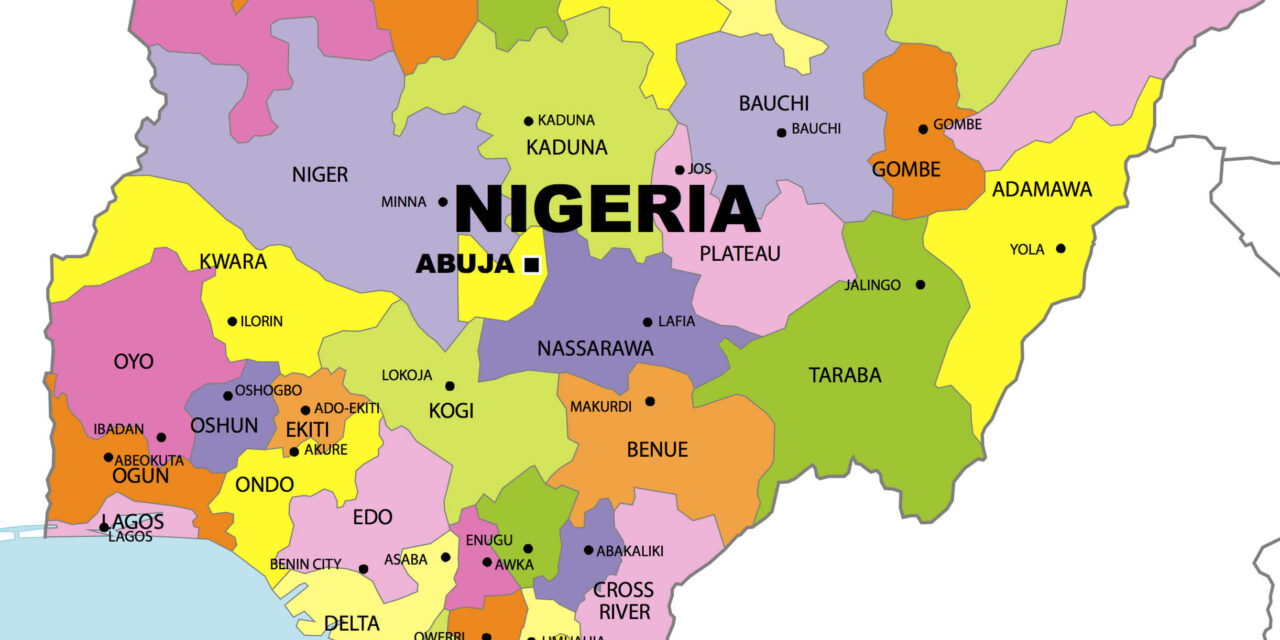
Onumba.com ——- All is not well with Nigeria. It serves no purpose to sugarcoat it. The country is gloomy, battered, limping and in the throes of a presidential election stacking up to be a bruising brawl.
But so much about the future of Nigeria is riding on how this election plays out. Let me set it up. If the upcoming 2027 election ends up being a clone of the 2023 contest, somehow the winner and the loser swapping places, then the thread knitting the country together as an ethnic quilt might start to unravel.
It would be reckless and foolish to dismiss the fact that Nigerians are still stewing over how the 2023 election went down and therefore not at all in the mood for a repeat of that horror show. Let me be blunt. If Peter Obi garners the plurality of the votes and the election is stolen as it was in 2023, then all hell will break loose.
There comes a time when a country on a slippery slope to doom needs to pivot and chart a different course. This is it. This is the moment. Any slick shenanigan to thwart the will of angry Nigerian people would erupt in an unprecedented and apoplectic fury. And dig this. The old worn-out tribal jingoism, religious sentiments and regional gaslighting that worked in the past, pitting one Nigerian against another, is not gonna fly this time. Nigerian plebs —— exhausted, hungry, depressed and feeling bamboozled —— have had it up to their eyeballs, and seemingly saying ‘enough is enough.’
If the election is manipulated and stolen again in favor of Tinubu, blaming it on some manufactured ‘glitch,’ Nigerian people would have to conclude that democracy in the country is nothing but an organized mass deception, pretty much similar to “419” and ‘one chance.’
Heck —– you don’t have to take my word for it. One prominent Hausa leader echoed a similar sentiment.
“Anybody that rigs this election will rig out his life,” he warned. I want to assure you that one. Nigeria is no more the Nigeria of yesterday. We are sophisticated. We have restive young men and women.”
That’s spot on.
But the concern is even more pronounced considering the public dismay and outrage that President Tinubu is methodically shepherding the country to a one-party state, an ill-advised move many fear could torpedo democracy and plunge the country into a catastrophic tinderbox. The president has been busy poaching the nation’s governors from rival political parties, wooing them with, who knows what, and thinning out the opposition. Get this. APC is now home to 31 governors, accounting for a whopping 86 percent of the nation’s state chief-executives, many of them being carpetbaggers. This is the epitome of presidential recklessness, foolishness and irresponsibility that risks shoving the country into turmoil.
The last time Nigeria flirted with something similar to that was in the 60s after former Head of State Aguiyi Ironsi announced plan to restructure the country into a unitary government. It colossally flopped and in part fueled the ghastly civil war. Nigeria is too big and too diverse for that kind of absurd arrangement. Perhaps, you can pull that crap off in Gambia or Togo, not Nigeria.
But while critics fault Tinubu for this, these shameless carpet-bagging governors with questionable morals ought to be called out as well. It all converges into the tragedy of Nigeria’s democracy being in rapid decline exacerbated by Tinubu’s gutting and kneecapping of the opposition parties and tampering with elections. Former President Goodluck Jonathan recently expressed concern over this, warning that the country’s democracy will “go into extinction” if election issues are not fixed. Every four years, politicians troop out seeking power, talking a good game, but achieving pittance concerning uplifting their fellow citizens, improving the country, and strengthening democratic institutions, voting systems and practices.
“People use government instruments to perpetuate themselves in power even when the people don’t want them,” said Jonathan, at a recent event. “People manipulate the elections to be there by all means.”
That said, the country now is buzzing with intense political chatters in the media and gearing up for a contest to determine the next president. Familiar faces are in the mix notably heavyweights Peter Obi, Atiku Abubakar, Rabiu Kwankwaso, Rotimi Amaechi and a few others in the second tier, including of course Jagaban himself, incumbent President Bola Ahmed Tinubu. The 2023 election was an ugly scar on the country, but hopefully, Nigeria will get its act together this time.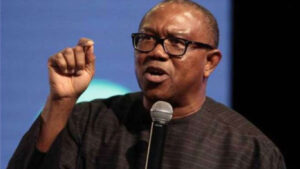
Namby-pamby approach to reform is not enough
But Nigeria can neither wish nor pray a good election into existence. It is going to require a heavy lifting, bold actions, bold reforms and fierce commitment to deliver the kind of election that Nigerians deserve. Achieving a free and fair election must not hinge on hope, fluff and business as usual, the kind of worn-out, namby-pamby approach blamed for past election worries, woes and wahalas. No. INEC officials should get off their lazy duff and fix the country’s weak capacity to achieve credible elections in time for the election. ‘The definition of insanity is doing the same thing over and over and expecting a different result.’
Folks, it has been profoundly disappointing, to say the least. Consider that Nigeria gained its independence in 1960, but has not recorded an election fit to be lauded as free and fair and devoid of post election kerfuffle. None. Poor infrastructure, organizational woes, lack of credible voter registration process, lack of power in some areas, security challenges and transparency issues plus occasional dustup and chaotic scenes highlight the depressing struggles of a country fumbling and bumbling its handling of elections to meet global standards. But above all, lack of commitment on the part of the authority dashes any hope of a credible election.
Supreme Court is not an objective umpire, behind an unelected man taking office
Dispute over elections often get mired in bitter legal tiff, leaving Nigerian electorate in a familiar quandary unsure of who actually won the election. It is awful, so much so that former President Shehu Yaradua fessed up that the 2007 election which ferried him into office left much to be desired. Nigerians cheered the spirit of candor he obligingly displayed as reflecting the kind of humility and good character that’s rare among his peers.
But don’t hold your breath expecting the current president to follow Yaradua’s lead. Heck, even as we speak, roughly three years after taking office, a concourse of Nigerians believe that Tinubu pulled a fast one on them, convinced that he stole the election that punted him to Aso Rock. He doesn’t even give a flying flamingo how people feel about it. Which is fine. But what does it say about a country where many of its citizens grumble that their president is not only illegitimate, but also bumblingly underperforming. Democracy demands an election process broadly viewed as free and fair through the eyes of the electorate who voted and independent observers who witnessed it.
Electoral reform is a no-brainer. Two areas to fix first
Nigeria is grappling with a torrent of election conundrums. But of all the challenges plaguing the country, two stick out as the leading culprits.
The first is a no-brainer, but still does not stoke enough concern. It is profoundly befuddling why this is not treated as major problem knowing fully well that the country is a beehive of corruption at all levels of government. No Nigerian, at home and abroad, will deny it. INEC itself is the problem compounded by the law allowing the president to appoint its leader. Doesn’t anybody see the large pink elephant in the room?
Let me graciously remind you that INEC is an acronym for Independent National Electoral Commission. Hone in on the word ‘independent’ for a minute. Thank you. In a country where politics is often transactional and dripping syrup of skullduggery, it has to be a prank for anyone to believe that INEC is truly and affirmatively an independent entity or would act accordingly, never mind that the dude who appointed its chairman has a horse in the race, never mind that the executive power to call the elections shots resides with the chairman, and never mind that his decisions are final. And please don’t insult us with the familiar cockamamie that the court is available for the aggrieved candidates to go and seek redress unless you can assure Nigerians that those appointed by Tinubu will recuse themselves, and unless the case will be adjudicated no later than 90 days from the date of filing or before the president takes office. If these conditions are not met, then the whole thing is bullshit.
It is misguided having the president appoint the chairman of INEC. Of course the assumption is that the chairman somehow would detach his feelings and biases from his decisions and bring a sense of balance and objectivity to the job. But that is hogwash because nothing about power, influence and connection in Nigeria bears that out to be true.
In short, this is election manipulation waiting to happen. Still, for the life of me, folks who leave in the beautiful city of Naive located in cockaign prefer to dismiss that. It will invite all sorts of shenanigans and racketeering, backdoor deals, and ultimately rigging the outcome to favor the guy who gave the chairman his plum job. That’s how it works in Nigeria where the ubiquity of corruption gnaws deep at every facet of the society, including INEC itself. Corruption is everywhere with practically everyone indulging in it. What am I saying? INEC is not immune from its menacing onslaught. You would be suffering chronic naivety to believe otherwise.
One doesn’t have to be an award winning nuclear scientist from an Ivy League institution to flag down the staggering conflict of interest wrapped up in a chairman picked by the president to oversee an election in which he is a candidate. Granted, anywhere else in the world, this might fly, but this is Nigeria, for crying out loud ——- a hopelessly corrupt country where unpatriotic, gluttonous and political coyotes and vultures conspire to pilfer billions of dollars from the public till, and go scot-free. Billions, my friends. Government offficials from Singapore are going to have trouble wrapping their heads around this menace, but Nigerians leave with it.
Then there’s the matter of reporting election results. It is a make or break aspect of the process because once a winner is declared, it is done. Folks can vote till the cows come, but if the counting is flawed, if the tally does not include all votes, and the reporting of the outcome not independently supervised and transparent, it becomes useless and a total waste of time. It makes mockery of the integrity of elections and undercut faith in democracy. But there’s a solution. To get it right, to achieve transparency, to offer Nigerians for a change a credible and trustworthy election outcome, to ensure that the candidate with the most votes is declared the winner, election results must be transmitted and reported to Nigerians in real time in the presence of independent observers and party representatives.
Anything short of this is flat-out nonsense, fraud and a departure from true commitment to democracy.