By Ike Mgbatogu
Staff Writer
Onumba.com,USA ——- It’s so refreshing to see African-Americans and Africans in the United States getting along so well now, but it wasn’t always like this.
Not so long ago, these folks did not see eye to eye. However, that’s pretty much water under the bridge now. Remarkable progress was made over the years finding common ground, so much so that American Blacks are now flocking to Africa in droves for myriad reasons.
And it feels great.
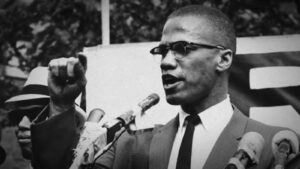
A visionary leader far ahead of his time, the late great Minister Malcolm X would be radiating with pride to watch his dream take root. The civil rights icon was a dogged pan-African disciple who often spoke of the day Africans and African-Americans would sit under the “vine tree” in a table of brotherhood and sisterhood.
Malcolm X did not live to see it, but the day he spoke of has come. The era of misgivings, social tensions, cultural friction which ripped both sides apart has largely receded paving the way for mutual understanding, respect for each other and embrace of shared identity.
End of hostilities
But what bridged the gulf to end the mutual loathe?
In a recent interview with Onumba.com, Judson L. Jeffries, Professor of African-American and African Studies at The Ohio State University highlighted specific catalysts that helped cultivate a sense of unity, bridging the previous divide between both sides.
Professor Jeffries noted that the proliferation of Black Study programs in American Universities, especially in Historically Black Colleges and Universities (HBCU) “sparked interest” among young African-Americans to study Black history. He attributed the 1990s cultural reconnection with Africa to the institutionalization of Black studies in higher education. American Blacks, not only began to show interest in Black studies, but more importantly, they began to “look at the motherland with pride.”
“You saw it in the dress, in the hair style, in speeches and in the practice of changing their names,” said Professor Jeffries.
Even Eddie Murphy’s classic movie ‘Coming to America’ was inspired by the sweeping embrace of Africa, he noted.
Asked if adopting ‘African-American’ over terms like ‘Negro,’ ‘Black American’ or ‘Colored’ played a part in this dynamic?
Professor Jeffries replied, “absolutely.”
Swapping the word ‘Black’ with ‘African’ was meant to point to a geographical place of origin. While there were sporadic instances of the use of ‘African-American’ to characterize Black folks during the term’s seminal era by such Black leaders as Richard Nathaniel Wright, Adam Clayton Powel Jr. and Malcolm X, Professor Jeffries credited the late civil rights icon Rev. Jesse Jackson as the man who “advanced it” and “popularized it.”
Where did both sides go wrong?
But all of this raises one important question?
Where were the mutual missteps that led to such deep loathe between African-Americans and Africans?
A convergence of factors played a role in this, all of which sums up to sheer ignorance on both sides rooted in differing historical experiences and embrace of mutual stereotypes.
For African-Americans, ignorance was shaped by stereotypical view of Africans, which was largely a reflection of being bombarded with bogus information about the continent through the Media. American Blacks were fed a steady gush of hogwash characterizing Africans as being primitive, uncultured, impoverished and dangling from trees ——- largely accounting for why they kept these Africans at bay.
Interestingly, African-American women were not having any of it. While the guys got all bent out of shape, the women had no issue dating African men.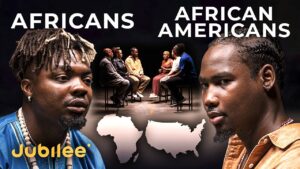
People even argued ridiculously about who actually counted as ‘Black.’ The clash over who could be called ‘Black’ was particularly bizarre. Some African-Americans hoarded the term ‘Black’ for themselves, excluding Africans from that designation, saying that ‘Africans’ were simply ‘Africans.’
But ignorance was a shared reality that equally affected Africans. They were largely uninformed about the historical struggles of Black Americans in the United States and therefore often spoke with a startling lack of filter and feckless insensitivity that helped deepen the misunderstanding.
Often, Africans would take offense at being framed as uncivilized by American Blacks, which they perceived as cultural elitism. Of course, it was not pleasant to disparage Africans as being uncultured, primitive and swinging from palm tree to forest Baobab but neither was characterizing African-Americans as violent and uneducated ——– totally oblivious to the traumatic experience they suffered during the antebellum eons of slavery.
Ignorance galore
But wait. Just how ignorant were these Africans?
Very.
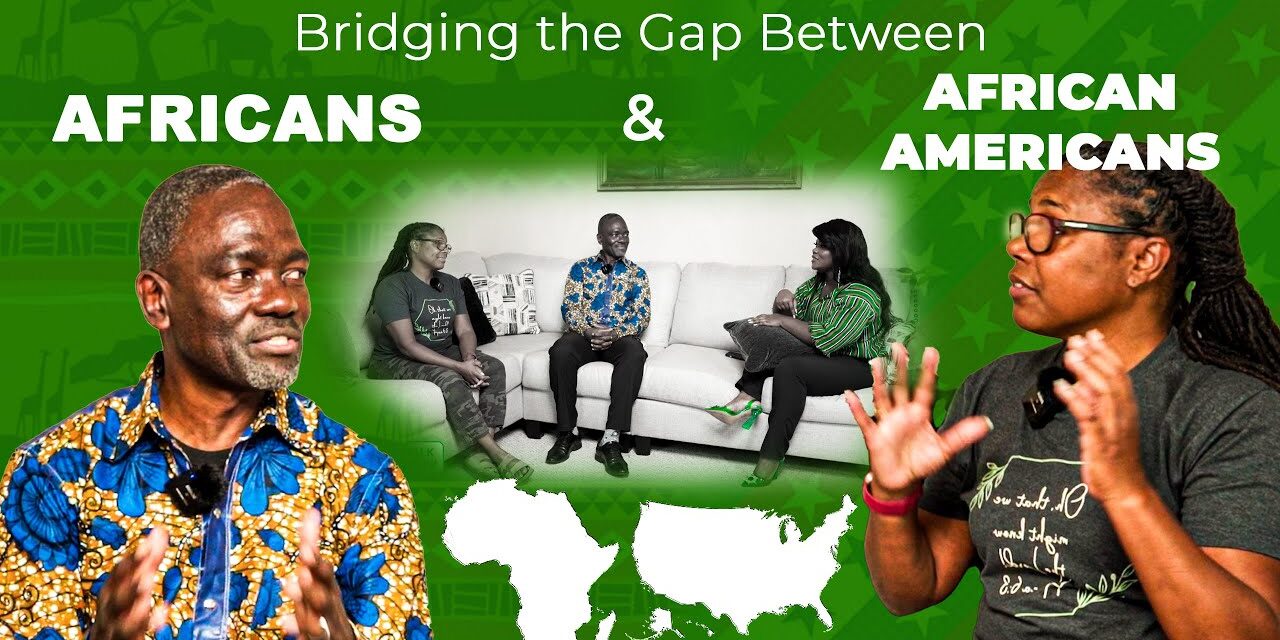
A few of years ago, Ghanaian native and YouTube colossus Wode Maya, convened a panel discussion addressing the cultural disconnect between African-Americans and Africans. Mr. E.B. Baffour, a Ghanaian living in the United States, was one of the panelists who humbly admitted:
“I had no idea about African-Americans. I had no idea what our brothers and sisters went through during slavery. I was totally ignorant.”
Wode Maya himself acknowledged the sprawling gaps in his own understanding.
“I didn’t even know there was someone out there called African-American…because we were not taught in school,” said Maya.
“So many of us don’t even know that we have brothers and sisters living in the Diaspora.”
Popular Nigerian author Chimamanda Adichie echoed similar sentiments.
“I went to America very ignorant. I thought Black Americans lived like the Cosby Show.”
Taken together, Mr. Baffour, Mr. Maya and Ms. Adichie epitomized the staggering height of ignorance among Africans disconnected from African-Americans. Unfortunately, the challenge is far from over. Even today, a vast majority of Africans remain plagued by the same lack of enlightenment.
African-American history not adequately taught in African schools, if at all
The root of this depressing conundrum isn’t really far fetched. While the experience of Black Americans during slavery was taught in some African schools, it only scratched the surface of the subject, leaving Africans hopelessly uninformed.
But even more tragic than that, for the most part, Africans failed to connect the atrocious experience of slavery in the United States to real people ——- African-Americans. That might account for why some American Blacks often blamed Africans for failing to come to their rescue in the New World.