By Ogochukwu Ogene
Contributing Writer
Onumba.com, Nigeria ——— Imagine being born in a country.
Growing up there. Going to school there. Making friends there. Representing your province in sports. Building your career there.
Then one day, you are told that you do not belong.
That is the reality Chidinma Adetshina is facing.
Recently, a group of women confronted her outside a court hearing in South Africa, chanting, “Nigeria is your home.” The message was clear. They wanted her out. Reports say the matter is part of an ongoing legal battle over her immigration status, while she argues that South Africa is the only home she has ever known.
But is it really that simple?
Chidinma was born in Soweto, South Africa, to a Nigerian father and a Mozambican mother. She has spent her entire life in South Africa. Her education, childhood memories, friendships, sporting career, and rise in the modeling industry all happened there.
South Africa is the only home she has ever truly known.
The controversy surrounding her citizenship stems from allegations linked to her mother’s documentation, not from any action of her own. If there were mistakes or wrongdoing by her parents, should a child bear the consequences for decisions she never made?
That is the question we should all be asking.
Nationality is more than what is written on a passport. It is also about belonging, identity, community, and lived experience.
For Chidinma, those experiences are deeply rooted in South Africa.
Asking someone to simply relocate to another country because one parent was born there ignores the emotional, social, and professional ties they have built over a lifetime. Starting over is never as easy as people imagine.
If her family and legal team believe she has a legitimate case to remain in South Africa, they have every right to pursue it through the courts. Every person deserves a fair hearing and the opportunity to defend their place in the only home they have known.
At the same time, if the situation ever reaches a point where her safety is threatened, Nigeria should be ready to welcome her with open arms.
After all, Nigerians have a way of embracing talent, celebrating excellence, and turning difficult stories into remarkable comebacks.
This conversation is bigger than Chidinma Adetshina.
It challenges us to think about identity, migration, citizenship, and fairness. It asks whether people should be judged by their own actions or by the circumstances of their birth.
No one chooses where they are born or the decisions their parents make.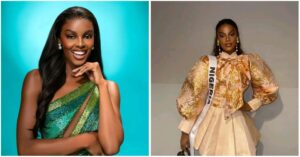
Justice should always focus on individual responsibility, not inherited blame.
Because at the end of the day, everyone deserves the chance to belong somewhere they can truly call home.
About the Writer: Ogochukwu Ogene is a creative writer, storyteller, and youth development advocate passionate about shaping conversations that inspire social change. Through thought-provoking articles and compelling narratives, she explores issues around leadership, identity, education, youth empowerment, and the future of Africa. Her writing challenges perspectives, sparks meaningful dialogue, and encourages people to think beyond headlines and stereotypes.