By Ogochukwu Ogene
Contributing Writer
Onumba.com, Nigeria ———– El Niño is developing in 2026, raising concerns about changing rainfall patterns and rising temperatures in Nigeria. Discover what it means for farmers, food prices, water supply and public health.
Nigeria Faces a New Climate Challenge
Imagine waking up one morning to intense heat, only to experience unexpected rainfall a few hours later. Imagine farmers struggling to predict when to plant, food prices rising because of disrupted harvests, and communities facing changing weather patterns that affect their daily lives.
This is why Nigerians need to pay attention to El Niño, a natural climate phenomenon that can disrupt weather patterns across the world.
On August 13, 2026, the Nigerian Meteorological Agency (NiMet) confirmed the onset of a strong El Niño event and warned that it could influence global climate patterns. Its subsequent forecasts raised concerns about changing rainfall patterns and above normal temperatures.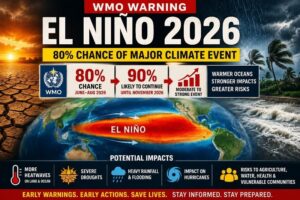
However, the effects will not be the same across Nigeria. Some regions may experience reduced rainfall, while others could receive more rain than usual. Understanding these differences is essential to preparing for the months ahead.
What Is El Niño, and Why Should Nigerians Care?
El Niño occurs when surface waters in the central and eastern tropical Pacific Ocean become unusually warm. This warming affects atmospheric circulation and can change rainfall and temperature patterns thousands of kilometres away.
Although the phenomenon begins in the Pacific Ocean, its effects can reach Africa.
According to the World Meteorological Organization, El Niño can increase the likelihood of extreme temperatures and disrupt rainfall patterns. Its effects depend on the strength of the event, the season and other climate conditions.
For Nigeria, this matters because millions of people depend on predictable weather for farming, food production, water supply and other economic activities.
When rainfall becomes less predictable, the consequences can extend beyond the weather. They can affect household expenses, agricultural productivity and the livelihoods of vulnerable communities.
How Could El Niño Affect Nigeria?
1. Rising Temperatures and Intense Heat
One of the major concerns surrounding the current El Niño event is the possibility of unusually high temperatures.
Nigeria already experiences periods of intense heat. Higher temperatures can make daily activities more difficult, particularly for outdoor workers, traders, farmers and people who lack reliable electricity or access to cooling.
Extreme heat can also increase the risk of dehydration, heat exhaustion and other heat related illnesses.
For families, this could mean greater demand for drinking water, increased electricity consumption where power is available and more difficulty sleeping comfortably during hot nights.
The concern is not simply that Nigeria will become hot. It is that unusually high temperatures could combine with existing challenges to make daily life more difficult.
2. Changes in Rainfall Could Affect Farmers
Agriculture is one of the sectors that could feel the effects of changing rainfall patterns.
Farmers depend on rainfall to determine when to plant, how to manage crops and when to expect harvests. When rain arrives late, stops unexpectedly or becomes excessive, agricultural activities can suffer.
NiMet’s 2026 forecasts highlighted differences in expected rainfall across Nigerian regions.
Parts of northern Nigeria were forecast to experience normal to above normal rainfall, while some southern areas were expected to receive normal to below normal rainfall during the August to October period.
These forecasts describe expected seasonal conditions, not guaranteed outcomes for every community.
For farmers, the practical challenge is knowing how to respond. Too little rain can affect crop growth, while excessive rainfall can damage farmland, wash away nutrients and disrupt harvesting.
Farmers therefore need timely weather information, suitable crop varieties and flexible planting plans to reduce potential losses.
3. Could El Niño Make Food More Expensive in Nigeria?
This is one of the biggest questions Nigerians should be asking.
Food prices depend on several factors, including transportation costs, insecurity, storage, exchange rates, fuel prices and agricultural production.
However, weather conditions can also influence how much food farmers produce and how easily it reaches the market.
If changing rainfall patterns damage crops or reduce harvests in important farming areas, the resulting supply pressures could contribute to higher prices for some food items.
The effects could be especially difficult for low income households that already spend a large share of their earnings on food.
It is important to understand that El Niño does not automatically mean food prices will rise. The actual impact will depend on local weather conditions, harvest outcomes, food distribution and other economic factors.
Still, preparing farmers for possible weather disruptions is one way to protect food production and reduce the risk of additional pressure on household budgets.
4. Water Supply Could Come Under Pressure
Water is another important concern.
When rainfall decreases for extended periods, rivers, streams, reservoirs and groundwater sources may receive less water.
This can affect households, farms and businesses that depend on these sources for their daily activities.
Communities that already struggle with reliable access to clean water could face additional pressure if dry conditions persist.
Reduced water availability can also affect irrigation and industrial activities.
On the other hand, areas experiencing excessive rainfall may face flooding, contaminated water sources and damage to water infrastructure.
This means different communities may need different solutions. Some may need to conserve water, while others may need better drainage systems and stronger flood preparedness measures.
5. Public Health Risks Could Increase
Changing temperatures and rainfall patterns can also affect public health.
Extreme heat can increase the risk of dehydration and heat related illness. Flooding can contaminate drinking water, damage sanitation facilities and create conditions that encourage the spread of some diseases.
Changes in rainfall can also influence mosquito breeding conditions and malaria transmission, although the relationship varies by location and season.
For Nigerians, prevention starts with simple but important steps.
Drink safe water regularly, take precautions during extreme heat, maintain proper sanitation and follow public health advice during periods of flooding.
Communities also need access to reliable weather information and health services to respond effectively when conditions change.
These are possible risks associated with changing weather conditions. They do not mean every part of Nigeria will experience the same health problems.
What Can Nigerians Do to Prepare?
Although individuals cannot control global climate patterns, they can take practical steps to reduce their exposure to weather related risks.
Farmers should follow NiMet’s seasonal forecasts, adjust planting decisions where necessary and seek advice from agricultural extension officers.
Households should conserve water where supplies are limited, stay hydrated during extreme heat and keep drainage channels clear ahead of heavy rainfall.
Businesses that depend on agriculture, transportation and outdoor activities should consider how changing weather conditions could affect their operations.
Communities and local authorities should improve drainage, maintain early warning systems and prepare for potential flooding or water shortages.
Government agencies should communicate local forecasts clearly and support vulnerable communities before weather related problems become emergencies.
Preparation works best when people receive useful information early enough to act on it.
Is Climate Change Responsible for El Niño?
El Niño and climate change are related to discussions about global temperatures, but they are not the same thing.
El Niño is a naturally occurring climate phenomenon. Climate change refers to long term changes in the Earth’s climate, driven primarily by human activities that increase greenhouse gas concentrations.
The World Meteorological Organization explains that there is no established evidence that climate change increases the frequency or intensity of El Niño events. However, global warming can amplify some of the impacts associated with El Niño because a warmer atmosphere and ocean can increase the severity of certain weather extremes.
For Nigeria, this distinction matters.
Preparing for El Niño requires attention to seasonal forecasts and regional weather patterns. Building resilience to climate change also requires long term investments in agriculture, water management, infrastructure and public health.
Both challenges demand informed planning rather than panic.
The Bigger Picture. Nigeria Must Prepare Before the Crisis
El Niño is a reminder of how closely our daily lives depend on the environment.
The weather affects what farmers produce, what traders sell, what families eat and how much households spend to meet their basic needs.
When rainfall patterns change, the effects can move from farms to markets and from markets to homes.
But the outcome is not predetermined.
With accurate forecasts, effective planning and timely action, Nigeria can reduce some of the risks associated with changing weather conditions.
The priority should be to help farmers make informed decisions, protect vulnerable communities, strengthen water management and ensure that Nigerians receive clear and reliable information.
The real question is not whether Nigeria can control El Niño. It is whether we can prepare well enough to reduce its impact on our lives.
As the phenomenon develops, Nigerians should continue to follow updates from the Nigerian Meteorological Agency and the World Meteorological Organization.
Because when it comes to climate risks, knowing what may happen is only the first step. Acting early is what makes the difference.
—
About the Author
Ogochukwu is a writer and storyteller passionate about making important issues easier to understand. Through research driven storytelling, Ogochukwu explores the issues shaping society, business and everyday life.
Share and let us know what you think in the comment section below. Please share your comments about the story in the comment compartment below. General comments should be sent to: onumbamedia@yahoo.com. Thank you for visiting our online newspaper.